
O-Ring Backup Rings for Industrial Sealing Assemblies
Support the Seal. Address the Clearance. Specify With Confidence.
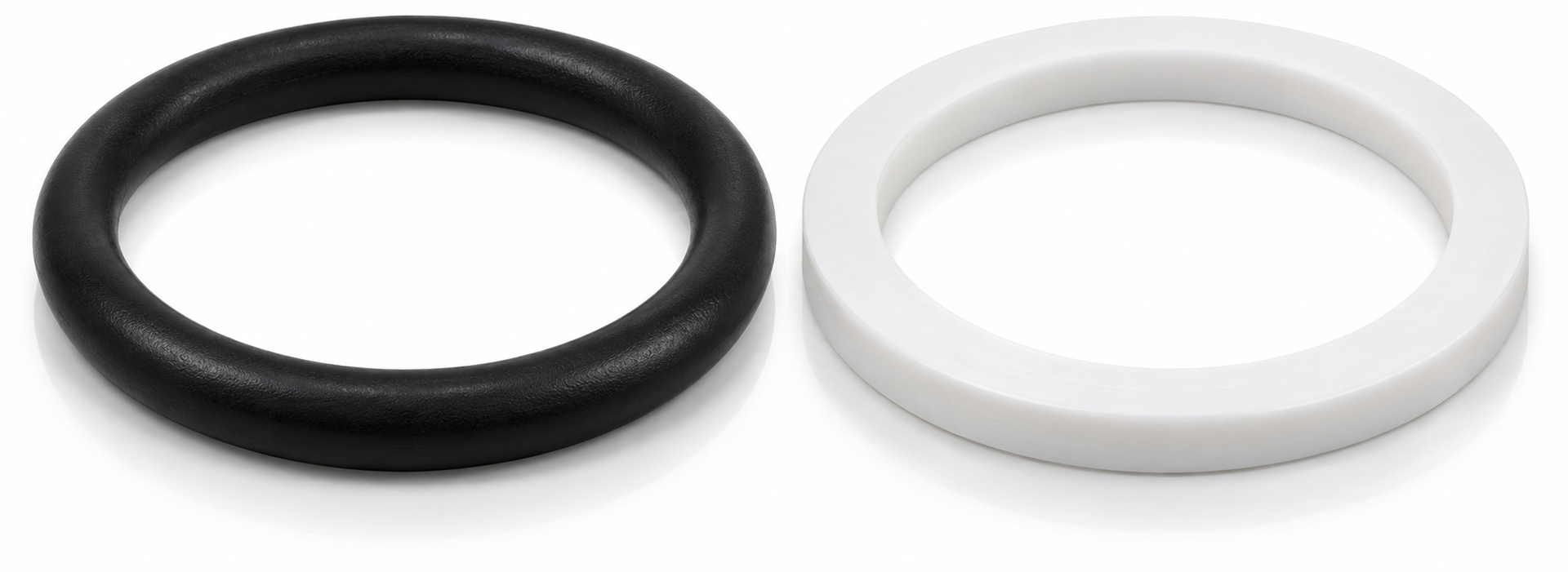
Pressure can force an elastomer seal into the clearance between mating components. O-ring backup rings provide support at that gap, helping limit extrusion when the ring, groove, and operating conditions are properly matched. They support the sealing element rather than replace it. Static Seals Selection Guide
Finn Global Supply helps OEMs, maintenance teams, and purchasing departments review sealing requirements in the context of the assembly. Send your drawing, existing part number, or seal details. Our team can discuss backup ring selection, material requirements, and product availability for your application.
Whether you’re reviewing a new hydraulic assembly or replacing a damaged seal, start with the complete arrangement—not the O-ring dimensions alone.
Call Us Now – 714-329-7686
What Do O-Ring Backup Rings Do?
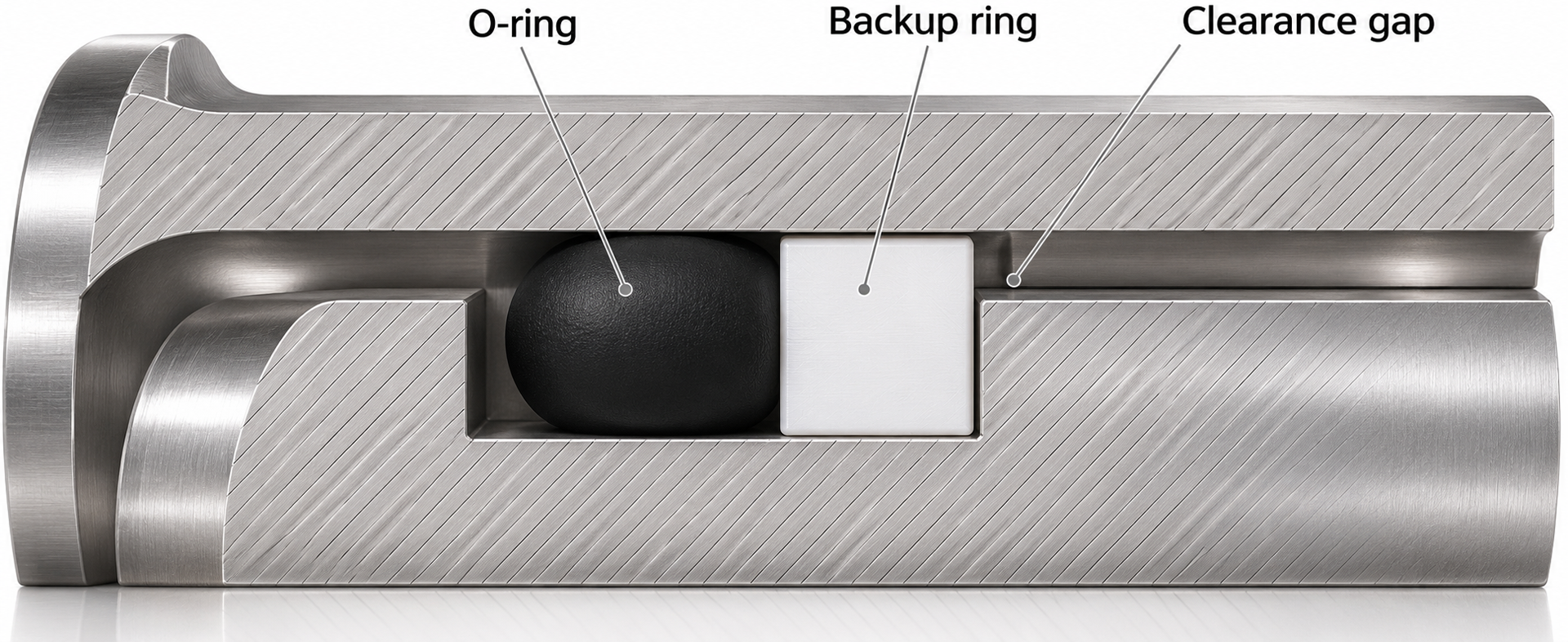
A backup ring sits beside the sealing element and supports it against the clearance gap. Under pressure, this support helps restrict the elastomer’s movement into that gap.
Anti-extrusion rings are supporting components. The O-ring still provides the primary sealing function, and its compound must remain compatible with the operating media and temperature. Adding a PTFE backup ring does not give an incompatible rubber seal chemical protection. Static Seals Selection Guide
If you’re also selecting the primary seal, review our Industrial O-Rings page for material, size, and construction considerations.
When to Discuss Hydraulic Backup Rings With Finn
Bring the backup ring into the discussion when reviewing extrusion damage, pressure changes, or clearance concerns. Include what happens during startup, normal operation, and shutdown.
| Application detail | What to include |
|---|---|
| Pressure | Normal pressure, peak pressure, and pressure reversals. |
| Clearance | Mating-part dimensions and tolerances, including changes under load. |
| Temperature | Minimum and maximum operating temperatures. |
| Motion | Whether the assembly is static, reciprocating, or otherwise moving. |
| Existing seal | O-ring size, compound, hardness, and any backup ring reference. |
| Observed damage | Photos of the seal, groove, and mating surfaces. |
There is no single pressure threshold that determines every backup ring requirement. Review pressure together with clearance, temperature, seal material, and the selected support-ring design. Manufacturer limits apply to specific configurations and operating conditions.
PTFE Backup Rings and Other Material Options
Backup rings can be produced from PTFE, filled PTFE, elastomers, and engineering thermoplastics. The appropriate material depends on the required support, operating environment, and installation arrangement. Static Seals Selection Guide
PTFE backup rings are worth discussing where the application calls for a fluoropolymer support component. Filled grades and other materials may be considered when load and deformation requirements call for a different approach. Confirm the exact grade rather than specifying “PTFE” alone. Static Seals Selection Guide
For an inquiry, give FGS the material reference shown on your drawing. If the material is open, include the fluid, temperature, pressure, and clearance so the options can be reviewed. Availability should be confirmed for the required size and construction.
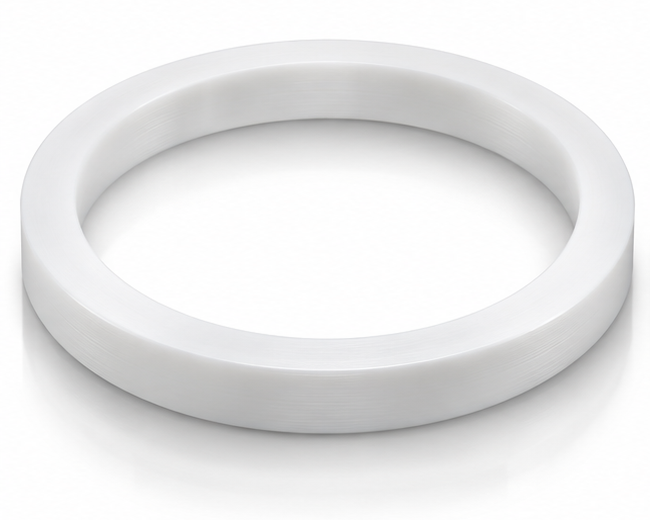
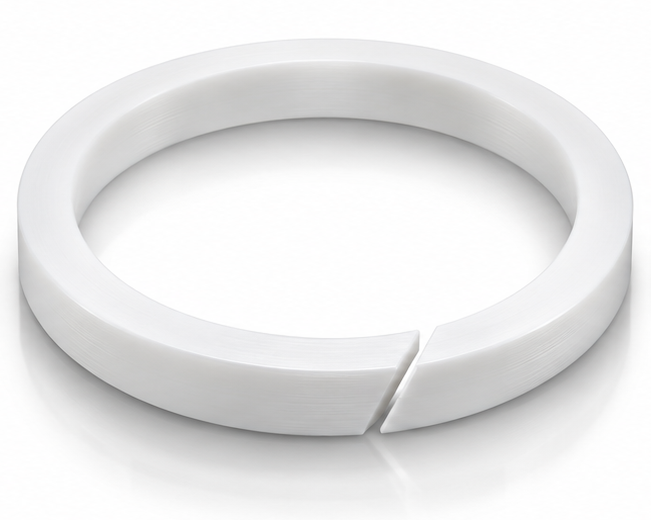
Solid, Split, and Spiral Backup Ring Designs
Construction affects how a backup ring can be installed and how it fits the gland.
| Construction | Selection consideration |
|---|---|
| Solid / uncut | Check whether the assembly provides access to install a continuous ring. |
| Split / scarf-cut | A cut can facilitate installation into some closed grooves. Confirm the specified cut and orientation. |
| Spiral | Check the designated profile and installation method against the gland drawing. |
These constructions are established backup ring options, but they should not be treated as interchangeable without reviewing the design. Static Seals Selection Guide
Finn can work from your existing part reference or drawing to discuss the required configuration and availability.
Solid
Split
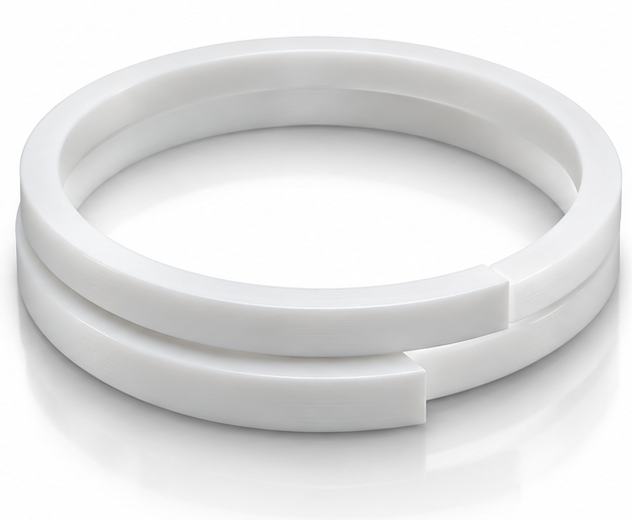
Spiral
Backup Ring Placement and Groove Fit
For a conventional single-direction pressure arrangement, the backup ring sits on the low-pressure side of the O-ring. When pressure acts from either direction, support may be required on both sides. Confirm the arrangement against the selected manufacturer’s design guidance.
The gland must accommodate the complete seal arrangement. Adding a backup ring to a groove designed only for an O-ring requires a dimensional review.
For a broader application overview, review our static seals selection guide.
Use our O-Ring Gland & Groove Design Guide to review squeeze, groove fill, clearance, and installation considerations. For ring identification, visit O-Ring Size Charts & Material Specifications.
One-direction Pressure
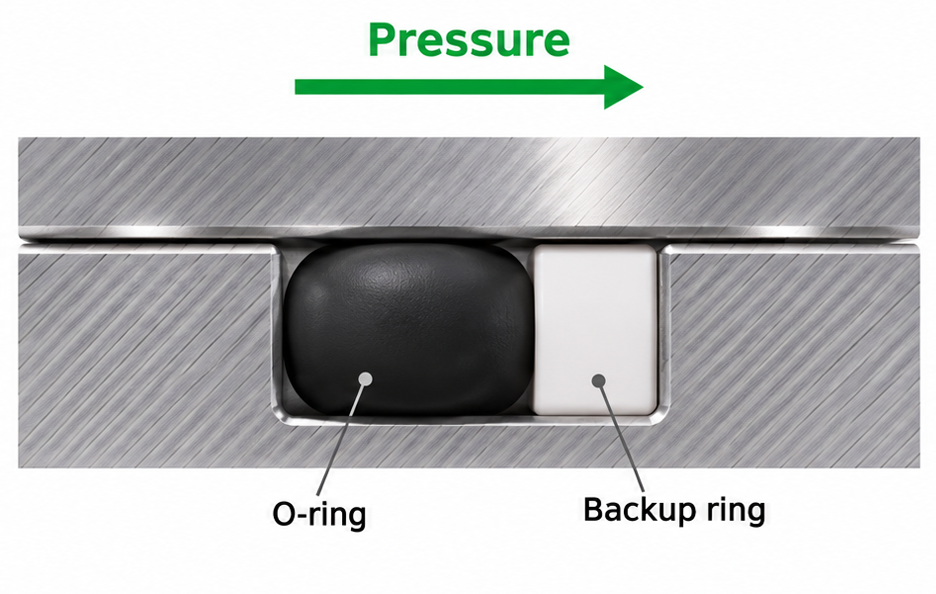
Backup ring on low-pressure side
Reversing Pressure
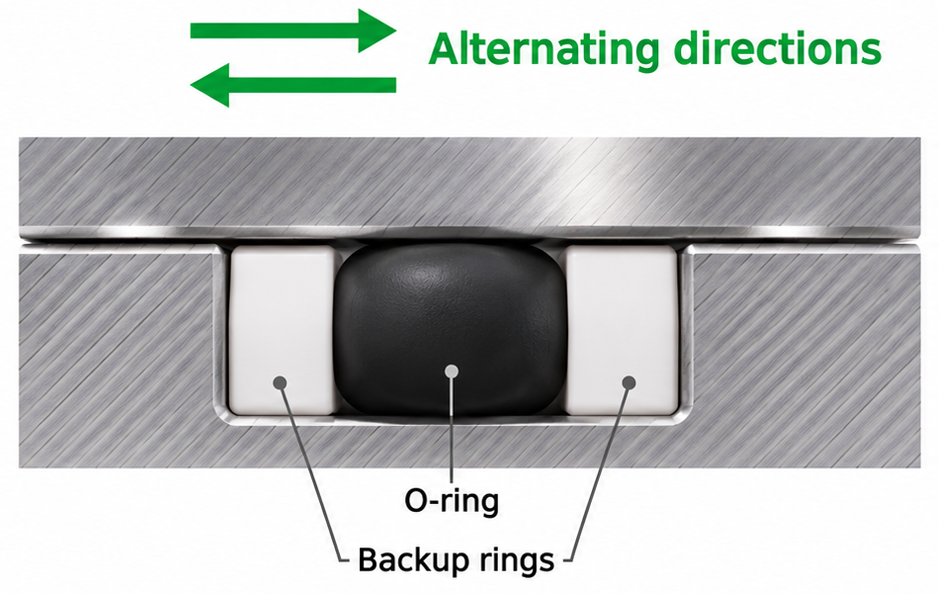
Backup ring on each side
Specify the Complete Sealing Arrangement
A clear inquiry helps purchasing and engineering work from the same requirements. Include:
- O-ring and backup ring part numbers, if available.
- Groove and mating-part drawings, with revision numbers.
- Material requirements and O-ring hardness.
- Normal and peak pressure, including pressure direction.
- Temperature range, operating media, and movement.
- Quantities, delivery requirements, and documentation needs.
For replacement parts, tell us whether the assembly previously operated successfully and what changed before the failure. Our Engineering Seal Design team can help identify the details that need review.
Request Backup Ring Pricing & Availability
Send Finn your drawing or existing part number. Include the O-ring details, groove dimensions, operating conditions, and quantity. We’ll review the requirements and discuss the options available for your assembly.
Call Us Now – 714-329-7686