
O-Ring Size Charts & Material Specifications
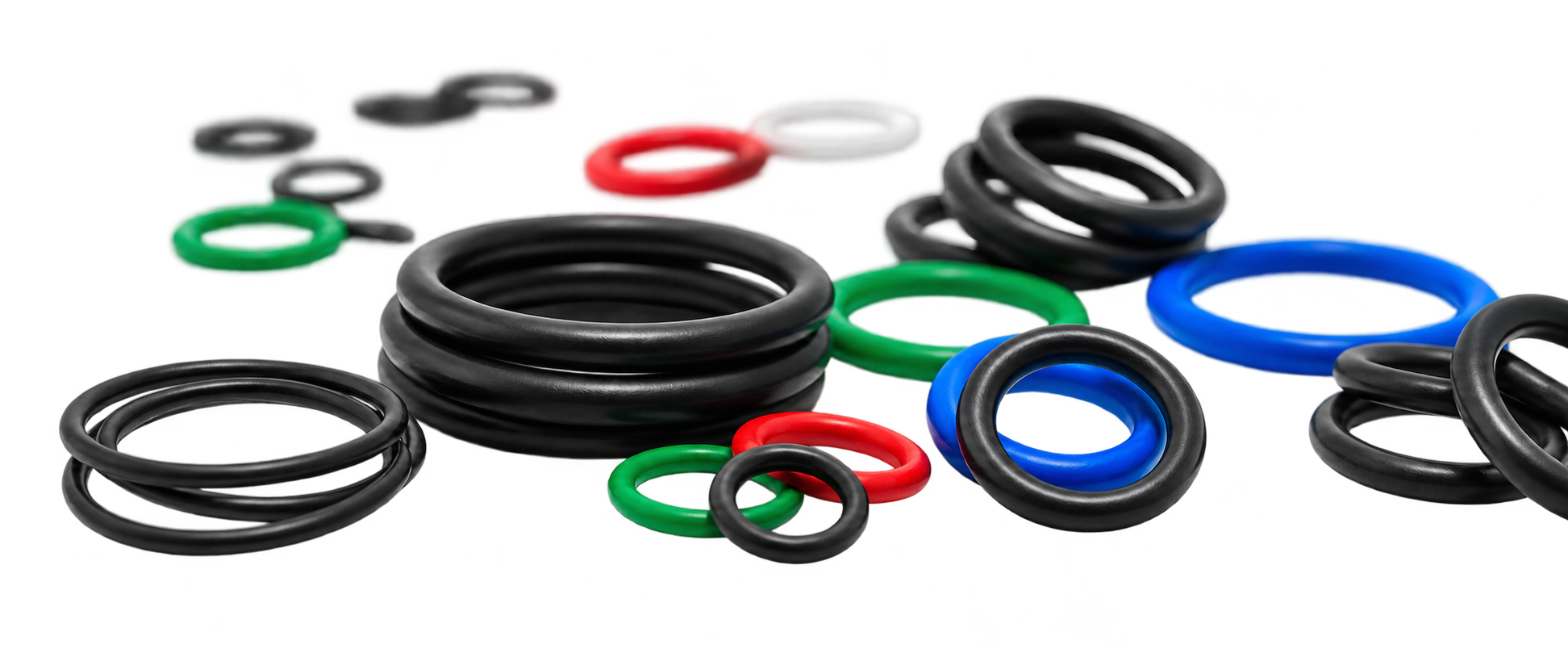
An O-ring specification starts with two things: the dimensions that fit the assembly and the compound that can handle the operating conditions. Use Finn Global Supply’s O-ring size charts to identify AS568 O-ring sizes and metric O-ring sizes, then review O-ring material specifications to narrow your selection. For custom O-ring sizes, send us your dimensions, drawing, or existing part number so we can review your requirements.
Whether you’re replacing a seal, specifying a new assembly, or sourcing for production, Finn can work from the information you have. Start with a dash number if you know it. If you don’t, share the inside diameter, cross-section, and what the seal needs to do.
OD - Outside Diameter
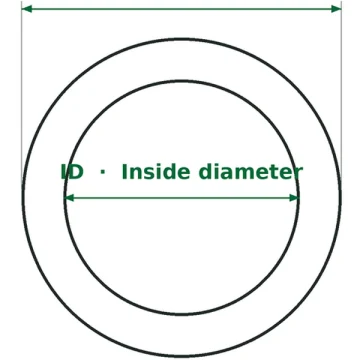
Front View
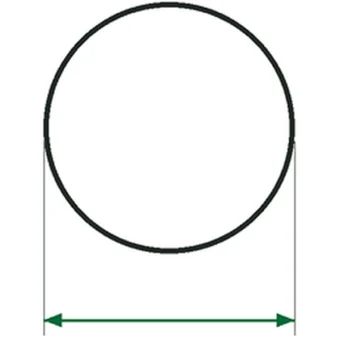
CS - Cross Section
Cord Detail - Enlarged
O-Ring Size Charts: Find the Right Dimensions
Start with the inside diameter (ID) and cross-section (CS). The ID is the diameter of the opening. The CS is the thickness of the round cord that forms the ring. Together, these dimensions describe the nominal size of a round O-ring.
You can calculate the nominal outside diameter using OD = ID + (2 × CS). For example, an O-ring with a 25 mm inside diameter and a 3 mm cross-section has a nominal outside diameter of 31 mm. Use the chart or engineering drawing to confirm tolerances before ordering.
AS568 O-Ring Sizes
If your drawing, parts list, or service manual calls out an AS568 dash number, use it as the starting point. The dash number identifies a standard combination of inside diameter and cross-section. It does not specify the compound, hardness, color, or any application approvals.
For a replacement order, send the dash number along with the material and hardness if known. For a drawing-controlled part, include the drawing revision and any material or inspection requirements.
Metric O-Ring Sizes and International Standards
If your O-ring is specified in millimeters, provide the inside diameter × cross-section, along with the applicable standard or series if known. For ISO 3601-1 sizes, include the designation or class shown on the drawing.
Two rings can appear interchangeable while having slightly different dimensions or tolerances. When comparing an inch size with a metric size, check both dimensions and the applicable tolerances before approving a substitution.
How to Measure an Existing O-Ring
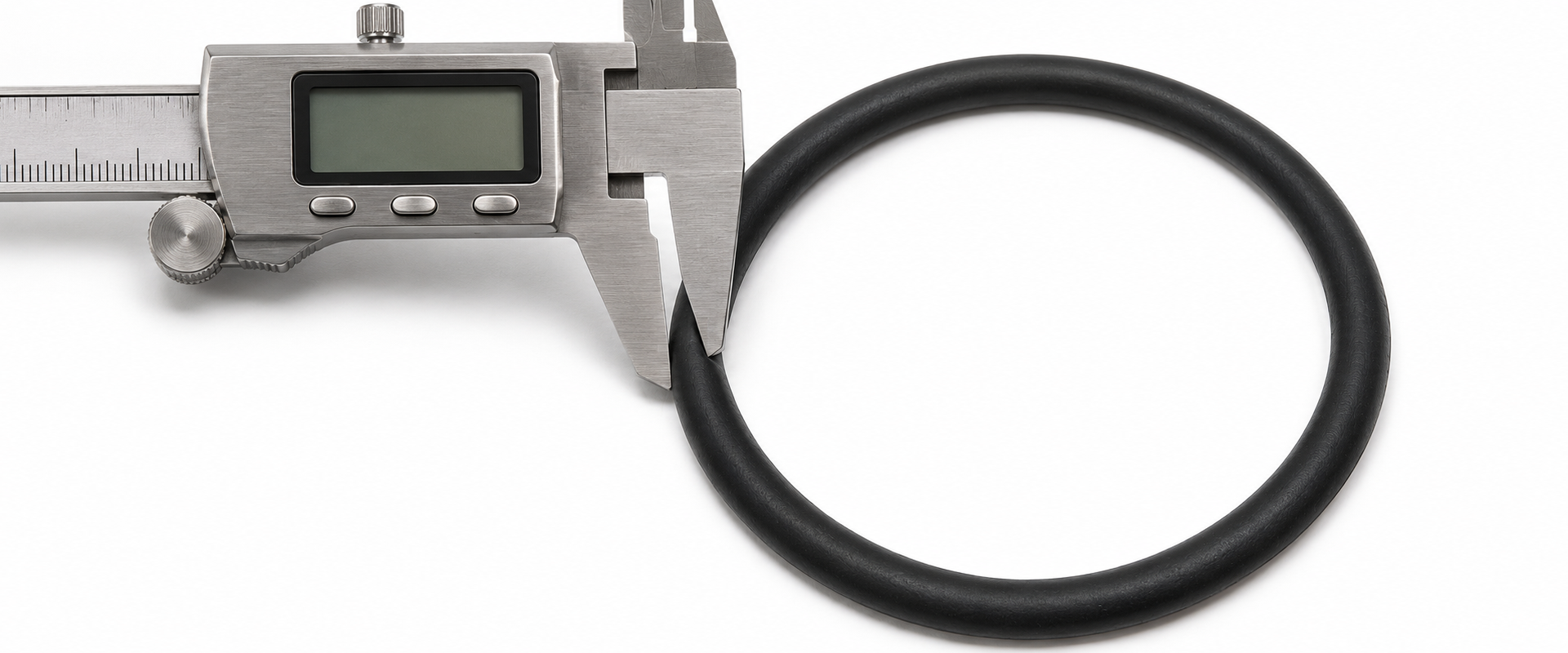
Lay the ring flat without stretching it. Measure the inside diameter, then check the cross-section at several points with light contact so the tool doesn’t compress the rubber. Record the units and note any visible flattening or damage.
If the seal came out of service, treat the readings as a starting point. A used O-ring may be swollen, stretched, or permanently flattened. A drawing, unused sample, or groove dimensions can help confirm the intended size.
O-Ring Material Specifications: Select for the Application
Once you know the size, specify the conditions the seal will face. Start with the fluid or gas it will contact, the operating temperature range, the pressure, and whether the seal stays in place or moves during operation. Include cleaning chemicals or washdown conditions when they apply.
| Material | When to consider it |
|---|---|
| Nitrile (NBR) | A starting point for many petroleum oil and hydraulic fluid applications. Confirm the actual fluid and temperature range. |
| Hydrogenated nitrile (HNBR) | Consider when a nitrile-based seal needs improved resistance to heat, ozone, or wear. |
| EPDM | Often considered for water, weather exposure, and some hot water or steam applications. Confirm the grade and service conditions. |
| Fluorocarbon (FKM) | A candidate for many fuel, oil, and higher-temperature applications. Check the specific compound against the media and minimum operating temperature. |
| Silicone (VMQ) | Consider where low-temperature flexibility or a broad temperature range is needed. Review tear and abrasion requirements for moving seals. |
| Fluorosilicone (FVMQ) | Consider where low-temperature flexibility and resistance to certain fuels or oils are both needed. |
| Perfluoroelastomer (FFKM) | Consider for demanding chemical or high-temperature service. Match the grade to the actual media and operating conditions. |
Material families are a starting point. For a production specification, confirm the compound code, Shore A hardness, service limits, and any required approvals. If you need a particular color for part identification or inspection, list it separately from the compound requirement.
Custom O-Ring Sizes and Special Requirements
If your dimensions don’t match a standard chart, send Finn the target ID, cross-section, and tolerances. For miniature rings, large diameters, or tight tolerances, a dimensioned drawing helps us review the options. Let us know if the print calls for molded construction, permits a splice, or requires a particular finish, color, or inspection document.
If you’re replacing an existing part and only have a sample, tell us where it fits and how it’s used. For new designs, include the groove drawing if available, along with the operating conditions. That gives us more to work from than the ring dimensions alone.
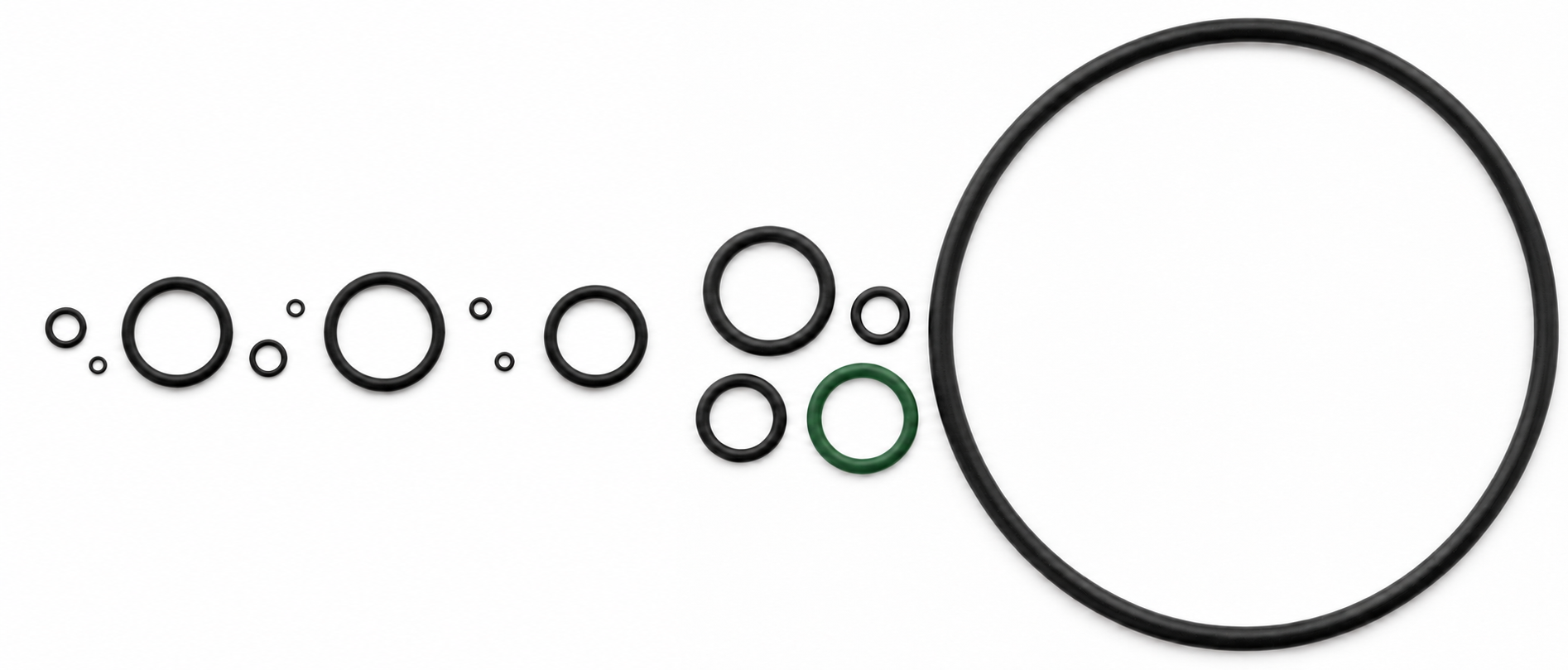
Precision Micro & Miniature O-rings
Request O-Ring Pricing & Availability
Send Finn Global Supply your dash number or ID × cross-section, material and hardness if known, and estimated quantity. Attach a drawing if the part has special tolerances or documentation requirements. If you’re still selecting a material, describe the application and we’ll help narrow the options.